
Laos Information & Resources Page
Hello there! Welcome to our ultra-secret information & resources page, specially built just for our guests who are coming to Laos. This page is not linked from our main website, so if you’re reading this, consider yourself inside the circle!
Here you’ll find a handcrafted collection of suggestions that will help you prepare for your upcoming trip to Laos, everything from what to pack, to tips on health and safety, and even Smiling Albino-endorsed books, movies and television shows that you can watch to learn more about the places you’re going to be traveling in. Exciting!
So while we’re building and refining all the details of your upcoming trip, please grab a beverage of your choice, put your feet up, and start to scroll.
Visas
All foreign visitors require a Tourist Visa, which is easily available upon arrival at several land borders and Vientiane, Luang Prabang and Pakse airports. The process is relatively painless, you’ll need to fill in a form, provide one passport-sized photo, and $30 – 42US depending on what country you’re from (Canadians have to pay the highest amount due to their general bonhomie nature). You’ll also need to provide the name of a hotel you are staying at during your first night in the country. A return, onwards ticket out of the country is also required for those arriving by air. There is a Departure Tax of $15US when flying out of the country.
Money
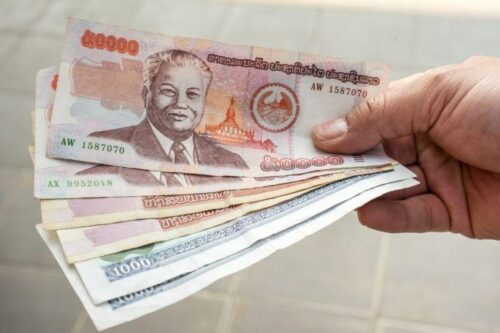
Laos’ currency is the Lao kip (LAK) and comes in bills only, denominations being: 1,000, 2,000, 5,000, 10,000, 20,000, 50,000 and 100,000. In reality three currencies are used, the other two being the Thai baht and US dollar. For small day-to-day purchase and in remote rural areas you generally use kip, while in larger centers and when making larger purchases it’s more common to use baht or dollars.
ATMs are available in Vientiane, Vang Vieng, Luang Prabang and Pakse. The amount dispensed will vary from US 70 – US 235 by bank. It’s also important to note that Lao kip cannot be exchanged outside the country so make sure you do so before departing.
Major credit cards (VISA, Mastercard, American Express) are accepted at major retailers only and usually a 3-4% service fee is incurred.
Emergency Numbers
Because Laos’ version of 911 is operated only in Laotian, we recommend calling the below number if the need arises:
- Smiling Albino 24-hour concierge (Thailand): +6684-466-4117
Health and Safety
For all Southeast Asian countries, following basic health precautions will ensure a hassle-free experience.
- Apply mosquito repellent during dawn and dusk.
- Drink plenty of bottled water (we will provide ample bottled water) and avoid uncooked meat and fish.
- A sun hat is recommended for days out. Not only does it look whimsical, it keeps the rays off your dome.
- Sampling market or ‘street food’ is generally okay and your hosts will steer you to safe bets.
- Cubed ice is preferable to crushed ice and avoid drinking tap water, but you likely won’t have to worry about this at any places we stop at, which all use ice from factories.
Check this vaccines and medicines list and visit your doctor at least a month before your trip to get vaccines or medicines you may need.
What to Pack, What to Wear?
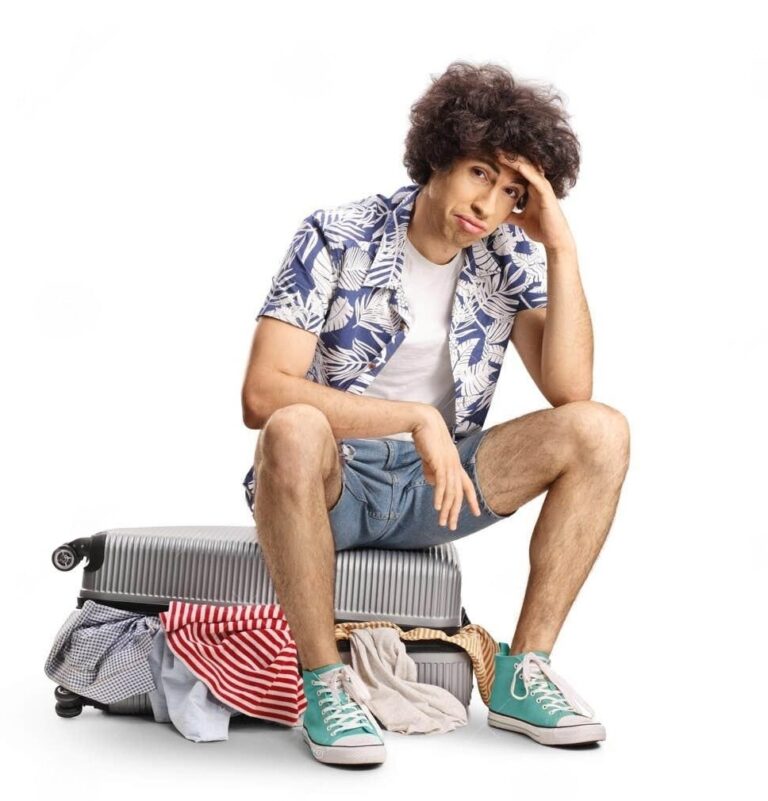
The best word of advice is to travel light. While your Smiling Albino hosts will take care of your baggage and you’ll rarely need to carry personal items further than 100m, it’s important to consider that you’ll also have to manage your bags when you’re not with us.
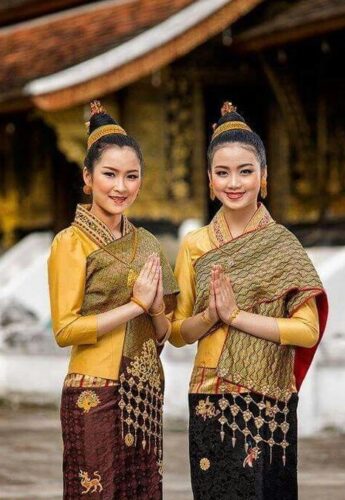
Being comfortable in a hot climate is key, but also keeping local customs in mind is of prime importance. Laotians by nature are rather modest and do not tend to show off flesh. When visiting temples they always wear a proper shirt and long pants. Every effort should be made to do so as well. While very hot, be sure to wear a shirt that covers your shoulders and light pants if possible. If you just can’t manage pants in the heat, you could get away with long, polite shorts, but consider taking a sarong with you (or buying some from the local markets!) that you can wrap around your shoulders or lower-half when visiting temples.
Luggage Restrictions on Airlines
Most premium regional carriers in Southeast Asia, such as Thai Airways, Bangkok Airways, etc. have standard luggage limitations of 20kg per person. Air Asia, a no-frills flier, has a limit of 15kg. Overweight can be paid directly at check-in.
Haggling
In all markets and some stores (you usually know when it’s appropriate) negotiating price is very much the norm. If you keep the conversation friendly, take your time and don’t look too eager you can usually shave anything from 10-60% off the initial price. However, keep in mind that spending 30 minutes haggling over $0.50 is not really worth it.
How Does Tipping Work?
Tipping is a relatively new phenomenon in Southeast Asia – of course, like anywhere in the world (apart from Japan) tips are always appreciated, but in most establishments the staff won’t be upset if you decide not to tip. Here are a few tipping, uh… tips:
- Restaurants: If you are dining at a simple street side stall, you generally don’t tip (though it is common to let the stall holder keep the change if it’s a small amount). If you are at a casual sit-down restaurant, 10% will do it. If you are eating at a more upscale establishment check the bill as a 10% service charge is often added. Leaving extra is fine, but you don’t need to leave a lot.
- Hotels: If you’re pleased with the cleanliness of your room and the maid service, leave 1.50-3.00 USD per day that you stay on the bedside table each day. If a porter brings your bags to your room, then again 1.50-3.00 USD is acceptable. If you have received great service from a particular staff member during your stay – the concierge or a member of the security team for example – then a small tip on departure, say 5.00 USD is a nice gesture.
- Guides: Our guides do not accept commissions or kickbacks from vendors, and they are well paid and motivated to do a great job taking care of you. That said, if you are genuinely satisfied, they would be grateful for something extra. A general guideline would be between 10-15 USD per person per day. For a family doing a multi-day trip, approximately 5-10 USD per person per day. There are times when extraordinary service warrants more, but use your judgment as you would at home.
- Drivers: Our drivers are dedicated to their job, with your safety and comfort above all else. If you formed a relationship with your driver and they have exceeded expectations, you may wish to consider tipping 5-10 USD/day.
Cultural Tips
Lao people are perhaps the most welcoming in all of Southeast Asia. Quiet by nature and curious, they also love a good laugh. To make sure you get the most out of your experience with locals, here are a few easy guidelines to make sure you don’t offend:
- Like all Buddhists in SE Asia, Lao view the head as the highest spiritual part of the body and as a result you should never touch someone’s head. The opposite holds true of the feet, which are viewed as spiritually the lowest part of the body and you should not do anything except walk with them. This means refrain from holding doors open with them, indicating direction, getting someone’s attention and definitely do not put them up on anything. Those feet are made for walking!
- Always ask permission before taking photos, especially in rural communities. Some hill tribe groups are suspicious of photos and don’t like them taken.
- Take your shoes off before entering buildings, temples and homes.
- Don’t sit on cushions. Despite sitting on floors being hard for westerners, these are not meant to be sat on and doing so will result in great offence.
- When calling someone over, motion with your hand down. If you motion with your hand up it can have sexual connotations.
- Lao are a conservative bunch and don’t appreciate showing off skin. While you will be hot in Laos, it’s important to keep covered up. Wearing a proper t-shirt (covered shoulders), longer shorts and pants when visiting temples will win you a lot of fans and ensure you don’t offend.
Religion
Sixty percent of Lao are Theravada Buddhists, the same form of Buddhism that is practiced in neighboring Cambodia and Thailand. This religion came to the country between the 13th-14th centuries and quickly took root. Today you can see the influence of Buddhism in daily life as monks walk the streets and peoples’ calmness is often a direct result of their beliefs.
The next most dominant non-Buddhist belief system is ‘Phi’ (spirit worship), which is also occasionally called animism. Certain tribes along the Mekong river valley, particularly the ‘Thai Dam’, are the largest group of believers with Hmong-Mien tribes and other hill tribe communities worshipping spirits which they believe reside in natural objects.
There are also some Christians who tend to be made up of the French-educated elite and a smattering of Muslims, many of whom fled persecution to neighboring Cambodia during the Khmer Rouge’s reign.
Shopping
There are lots of interesting finds in Laos. The scene is continually changing with new stores opening weekly to serve the growing visitor’s market. Hill-tribe silks, arts, crafts, home-furnishings, silver products, jewellery and couture quality textiles dominate the market. Remember to use wisdom and common sense while shopping. Sometimes free advice from taxi drivers or hotel staff have hidden agendas to satisfy family or personal networks. This does NOT mean that you won’t get good advice – often you do – just be savvy when soliciting free advice from locals outside of your Smiling Albino ground team.
What to See, What to Read?
Whether you’re preparing for your adventure, currently enjoying it or reminiscing years later, food for the soul is always a good thing. These picks can be enjoyed while overlooking the karst mountains, lazing near a green rice field, riding the plane or lounging on your couch at home. Here are some books and movies we enjoy that cover a broad slice of Laotian life and history.
Books
- CultureShock! Laos: A Survival Guide to Customs and Etiquette by Robert Cooper. Laos can be a confusing and contradictory place. This easy-to-read guide is from the perspective of an Englishman who runs a book shop in Vientiane and has lived in South East Asia for more than 30 years. It answers questions about Buddhism, the heavy drinking culture in Laos, Lao people’s relationship with the truth, strong family relationships and more. Cooper discusses the connection between the Thai and Lao people, their similarities and also what makes them distinct.
- The Edge of Tomorrow by Tom Dooley. Written in 1958, this is an American physician’s first-hand account of his humanitarian work in Laos. After leaving the navy in 1956, Dooley started a private, mobile medical unit in Laos in an effort to provide medical and nutritional aid for the Lao people. Widely circulated by the U.S. Information Agency as part of cultural diplomacy efforts.
- Crescent Moon Over Laos by Mark Boyter. A travel memoir from Boyter’s 18-day trip to Laos in 1990, not long after the border was re-opened for foreign visitors. Throughout the book, Boyter reflects on his life, speaking with monks and guesthouse owners who have been studying English in anticipation of the border opening.
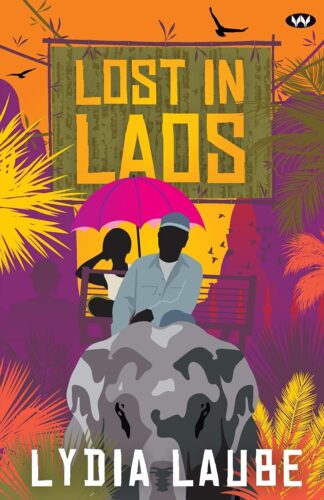
- Lost in Laos by Lydia Laube. Comprising twenty-six informative and amusing short stories by Australian writer, Lydia Laube. After enduring a close call with Thai immigration officials, Laube arrives in Laos (the Land of a Million Elephants) and discovers a people and land easy to love.
- Love Began in Laos: The Story of an Extraordinary Life by Penelope Khounta. A Western women, Khounta, meets, falls in love with and eventually marries a French-educated Lao man. Recalling the first 7 years of their marriage, Khounta, now widowed, reflects on not knowing the culture, language or customs of Laos and how she learned and adapted, eventually raising children and splitting her time between California and Vientiane.
- The Coroner’s Lunch by Colin Coterill. This is the first in the delightful Dr. Siri Paiboun murder mystery series, The Coroner’s Lunch is set in 1975 post-revolutionary Laos. With the help of a nurse and a morgue assistant, Dr. Siri works to investigate suspicious deaths that the communist party would rather keep under wraps. A percentage of profits from sales of these books goes towards supporting COPE (Cooperative Orthotic and Prosthetic Enterprise) ensuring that people in Laos with physical disabilities have local and affordable access to a quality, nationally-managed rehabilitation service.