SmilingAlbino.com   
info@smilingalbino.com | (662) 718-9561 (Bangkok) | More »

Smile@Ratchaprasong: Hosting Tourism Authority of Thailand (TAT) media event

TAGS: None

Over the past year or so I’ve been invited by the Tourism Authority of Thailand (TAT) to emcee media events such as this year’s Ultimate Thailand Explorer’s Challenge. In addition, I’ve also had the good fortune to be named a tourism ambassador for such events as the revitalization of tourism following the 2005 tsunami, or more recently following Bangkok’s political demonstrations as an internet-television host for interviews about tourism in Thailand.

Another occasion arose to get in the game of revitalizing Thailand’s tourism image this past weekend during the “Smile@Ratchaprasong” Festival coordinated by the TAT and the Ratchaprasong Business Community. The Ratchaprasong area of course is where the Red Shirt demonstrations took place this past spring (perhaps you heard about it?), which left a temporary sour note in one of Bangkok’s ordinarily more vibrant neighbourhoods. The “Smile@Ratchaprasong” Festival sought to bring people back by way of a town fair– type atmosphere: live music concerts, games, competitions, crafts workshops, photo contests, retail space, moms & tots, etc. In addition, the TAT invited a wide range of media to the event, from traditional TV, newspaper and magazines, to the active social media influencers around town who were vital in reporting on-the-scene truths during and after the demonstrations this past spring. So, in an inspiring step forward, the TAT sought to recognize the importance of this new media vehicle and build bridges into this community. I was to host them on the first morning of the festival, followed by an informal lunch with the Governor of the TAT, Suraphon Svetsaranee, as well as Deputy Governor Prakit Piriyakiet, Executive Director Sugree Sithivanich, and Director of Communications, Thapanee Kiatpaiboon.

Some of our guests on the outing included local social media notables Michael, Richard, John, Greg, Jack, Anthony, Trevor, and more.

social media celebrities unite!

Social media celebrities unite!

So, how do you impress a group of seasoned locals and keep them interested for a half-day of visiting the very neighbourhood where many of them live, work and play regularly anyway? Enter Smiling Albino!

As an enhancement to the festival, Smiling Albino was asked to provide some entertainment and information to this group of bloggers, tweeters, online travel gurus and iWizards. So, rather than bludgeoning them with miles and miles of retail and music, we did what we have always thought travel should be about anyway: get involved with the locals.

Using the Ratchaprasong neighbourhood as our canvass, we drafted up a simple walking adventure, mixed with a private boat trip and a few sneak-a-peaks into local villages, shops, homes, boat piers and focused on the life and times of the local people who live, work, and pray in Ratchaprasong. In a two-hour jaunt we tasted the local food, heard the stories of the local shopkeepers, cooks, villagers, and spoke to boat drivers and pier custodians about life before and after the demonstrations. Some of us even tried our hand at making the curious kanom tokyo snacks. Nothing fancy – just an opportunity to get in touch with the community, and make the locals the stars for a day. The concept was “live, eat, work and pray in Ratchaprasong”

Here’s a quick breakdown of the trip:

Pray 1 – start at Erawan Shrine – the venerable spirit keystone of the entire neighbourhood. Flanked in untold mystery and curious history, the open-air goodness emanating from this corner of Ratchaprasong is a must for any walking experience in the neighbourhood.

Eat 2 – from here it was time to walk along Ratchaprasong Ave across from the recovering Central World Complex, currently getting a new make-over to grace Bangkok’s retail block once again. Here we spoke with Khun Tan, the lady who has run a small clothing shop (read: clothes hanging on a pole beside a tree along the roadside) for many years. Over the past few months her revenues have been cut in thirds, and she is improvising with a new Thai sweets stand selling kanom tokyo.

Greg steps into to street-hawker shoes and makes kanom tokyo

Greg steps into to street-hawker shoes and makes kanom tokyo

Greg kindly showed us how it was done and may have even sold some of his innovations to the passers by. This is a great strip of Bangkok to sample all kinds of street food, from kanom krock (the ping pong ball-looking coconut snack), to moo satay (pork skewers that taste better than they look) beyond the canal bridge, to Isaan-cum-urban dweller favourites, som tam and gai yang (papaya salad and grilled chicken).

Live 3 – Tao Phu Village

From here cut across the street into what looks like a construction site across from the canal bridge over the Saen Seab Canal. Beyond this cement factory is a narrow series of streets that pass through the Tao Phu Village (cement mixer village in Thai, named after the giant factory that dwarfs its sensibilities to the north). This oddly peaceful pocket of Ratchaprasong was a hotbed of activity during protests last spring, and the locals were happy to share their stories and demonstrate that they were ready to step into a fresh new chapter. A few hundred families make up this community, sequestered between the factory, Central World, and the edge of the Centara Complex to the west. Just another one of those places you’d never knew existed in this amazing city…

Tao Phu Village - stuck between a cement mixer and mega-mall

Tao Phu Village - stuck between a cement mixer and mega-mall

Work 4 – from Tao Phu Village cross back to the boat bridge and meet Mr Lert, the long-time manager of the boat station which serves as a main hub for what is Thailand’s longest canal, Khlong Saen Saeb. Mr Lert runs 60 boats up and down the canals from Bangkapi all the way to the Phan Fah Bridge in Banglampu, near Democracy Monument and Khao San Road. On our SA mini-adventure we hired a private boat to take our guests down the canal to famous Hua Chang Bridge station at Siam Square and the Bangkok Art & Culture Center. It was nice to see the boat business back at full throttle again, and Mr Lert kindly gave a couple of quick interviews before returning to his liquid thoroughfare office.

SA's Bank aboard a canal water taxi towards Siam Square

SA's Bank aboard a canal water taxi towards Siam Square

Live 5 – at the Hua Chang Boat Stop, one exits the boat stand into a small but lovingly cared for garden area run by Khun Rampui. She is the jovial lady who runs the red fridge with cool drinks and snacks for boat passengers. She graciously invited us into her wooden two-story house which precariously lurches out over the water. She has been there for many years and in exchange for rights to live and work in the space, she is also the custodian of the boat pier, hence the greenery and generally nice atmosphere.

Work (and shop) 6 – from here we walked along Rama I Road and checked out work on the rebuilding of retail space around the old Siam Theater. Many of the tenants who lost their space after the spring fires have set up a mini strip mall of canvassed cubicles on Siam Square Soi 4, while work is done to rebuild more formal retail space beside the theater. Life is marching on – and the resiliency of Thais and the smiles on their faces was a positive reminder that indeed The Land of Smiles is back in business! Travel here now!

Pray 7 – We ended the walking trip in an affirming manner, giving alms to monks at the Pathum Wararam Temple. This deep garden sanctuary is cocooned between Siam Paragon and Centara Grand/Central World complexes.

Wat Pathum Wararam's garden walking paths

Wat Pathum Wararam's garden walking paths

It was also a safe haven for the fleeing protesters during the sweeping up operations which ended the demonstrations last spring. We thought it was a fitting ending to end this mini adventure on a high spiritual note, and a chance for a nice stroll through the temple gardens, and to use one of the nicer bathrooms in the neighbourhood.

From here along the skywalk all the way to the Grand Hyatt Erawan for a lunch with the TAT Governor and friends to discuss tourism initiatives and how to bridge ties into the social media world. All up – a good morning.

long table discussion with TAT Governor Suraphon Svetsaranee

Long table discussion with TAT Governor Suraphon Svetsaranee

There was some positive discussion during our luncheon about how the social media community can get involved in the revitalizing of Thailand’s tourism industry, and more importantly how the TAT can catch the slip string of this momentum and make positive inroads into this exciting medium. Great work from Kae, Bank and Scott in the SA Office to get this mini-adventure off the ground last week, and special thanks to Bank for being a great host and trip leader for our media guests.

Great to have you all on board guys and thanks for the extra photo support, John!

Staying at The Metropole Hanoi

TAGS: None

The Sofitel Metropole Hanoi is often mentioned in the same sentence as the Mandarin Oriental Bangkok or Raffles Singapore.

                         vintage fleet at a vintage location

Vintage fleet at a vintage location

The Metropole, built in 1901, is Vietnam’s grand dame of hotels whose famous white neo-classical facade has become one of Hanoi’s primary landmarks.

I have visited and inspected the hotel on many occasions, and Smiling Albino recently hosted European celebrity media for a series of events at the hotel in early 2010. During May 2010 I had an opportunity to experience the fullness of the hotel as an in-house guest, and The Metropole delivers on multiple levels.

Originally built by two French investors at the turn of the 20th Century, The Metropole has been under the management of Accor’s luxury arm, Sofitel, for several years. The original building, known as the Old Wing or Classical Wing, has been lovingly restored and features 3 room categories:

Old Wing Grand Luxury

Old Wing Grand Luxury

Luxury Room (32sqm), Grand Luxury Room (37sqm), and The Legendary Suite (70sqm). These rooms are for the romantics, the nostalgia fans, those wishing to celebrate the colonial grandeur of Indochina. Period artwork and photographs line the walls, and the Old Wing gives the air of a luxury French mansion for heads of state, authors, and dignitaries.

The New Wing is a 7-story addition on the opposite side of the pool and garden area. Completed in 2007, it features stylish, neoclassical rooms with brilliant colour and lighting schemes. The New Wing still carries the air of colonial French influence, with internal shutter windows and replica claw foot bathtubs and wide hallways. The rooms feature wood and carpeted floors with fresh, tropical colours, pink, scarlet, mauve. Overall the New Wing rooms feel slightly larger and brighter than their vintage sisters in the Old Wing. Located on the side of the hotel closest to Hanoi’s gorgeous Opera House, the New Wing is also referred to as the “Opera Wing”. New Wing Rooms feature four categories: Premium Rooms (32sqm), Grand Premium Rooms (48sqm), Prestige Suites (64sqm), and the hotel’s top room, the Grand Prestige Suite (176swm).

Opera Wing Grand Premium Room

Opera Wing Grand Premium Room

My favourite in this category is the Prestige Suite, which features fresh colours and a creative room layout, a half-wall separating the bathroom and lounging area, and a large bedroom with contemporary furniture featuring a perfect blend of colonial and Vietnamese styles.

Old Wing vs New Wing

This a “Coke vs Pepsi” debate that doesn’t have a definitive answer, and ultimately comes down to taste. The “Classic Wing vs Opera Wing” debate has gone on in the Smiling Albino office as much as the “Mandarin Oriental Bangkok vs Peninsula Bangkok” debate has. The Metropole’s Director of Rooms commented in fun that, “…the Old Wing is for lovers, the New Wing for artists…”.

Old Wing (also known as Historical or Classical Wing) rooms are located on the original three-story building of the hotel. They feature high ceilings, French window shutters, dark wood and period lamp shades, desks and accessories. There is more of a museum-like atmosphere, with a beautiful original wood staircase, open lobby with oil paintings, and a vintage telephone-booth sized elevator. The New Wing is a dramatic contrast as you exit the lift onto the floors with fashionable designer wallpaper and brilliantly striped carpets and furniture. There is a flair of Parisian hipness in this part of the hotel, and the New Wing rooms are a little more cutting edge, taking advantage of natural light and modern design innovations. The Old Wing rooms are more nostalgic, elegant, and subtle. Neither lacks luxury or class. The beds, bathroom fixtures, electronics are top drawer and the fines level of luxury.

Recommending which room is right for you and for your trip is serious business.

Smiling Albino recommends room types with an eye to our guest’s overall program, taking into account where else they are staying in Vietnam. For example, if guests are also going to Dalat and staying at the palatial Sofitel Dalat Palace , then in Hanoi we’d recommend New Wing rooms at The Metropole as the Old Wing rooms would too closely resemble the vintage colonial feel of the Dalat Palace. Same applies for La Residence in Hue, or Majestic Hotel in Saigon. Both offer an early 20th Century classical French-style grand hotel. However, if staying at Pilgrimage Village in Hue, which is a modern luxury reincarnation of a traditional Vietnamese village, and staying contemporary in Saigon, then perhaps the Old Wing Rooms at Metropole Hanoi provide the colonial checkmark for the full deck Vietnam hotel experience.

As a general rule:

New Wing:

“Dish me up some designer-cool with a subtle stroke of colonial class. We thought Mandarin Oriental Bangkok was okay, but we’d prefer The Peninsula Bangkok next time around.”

Old Wing

“Forget the fancy contemporary flair as we can do that anywhere, we want to step back into the grandeur of colonial Indochina. Besides, we loved Mandarin Oriental Bangkok and can’t get enough of it.”

Last point, I did notice the New Wing rooms had a slightly younger crowd, there were designer jeans and fancy shoes. The Old Wing crowd featured a bit of everything, but generally a little older, fewer iPhones.

Swimming Pool with a view to the Opera Wing

Swimming Pool with a view to the Opera Wing

The pool, spa, fitness room, restaurants are of course in a league of their own in Hanoi. Even if not staying at the hotel, some afternoon drinks in the Bamboo Bar around the pool is a must, as is Le Beaulieu for a quick peak and absolutely Angelina’s Bar for multiple cocktails and Hanoi high society intrigue. This is a local hot spot for events and business gatherings, and fashion shows, etc.

Smiling Albino was recently selected by Clarins Cosmetics Co. to host a retinue of top French media in Vietnam during their orientation to The Metropole’s Le Spa, which features Clarins’ wellness products. The spa is world class and deserves a visit for a treatment. One of the best in Vietnam.

Meet us for a drink in Le Club!

Meet us for a drink in Le Club!

There are some outstanding top end hotels in Hanoi, not forgetting the sleek new Intercontinental Westlake, and the Sofitel Plaza, as well as old favourites the Hanoi Hilton and Sheraton. In addition to being the most storied hotel in town, Metropole Hanoi is right in the heart of the action just a few blocks from the lake. The Metropole has no equal in Hanoi, which comes at a price, but the overall experience can’t be discounted.

Smiling Albino can arrange rooms and services at Metropole Hanoi at competitive rates, and as part of your customized Smiling Albino adventure in Vietnam.

Staying at Soneva Kiri by Six Senses

Tags: , ,

After much fanfare during the launch phase of Soneva Kiri, Six Senses group’s latest ultra-luxury resort concept in Ko Kood, I had the pleasure of a visit to check things out with a Smiling Albino fine-tooth comb.

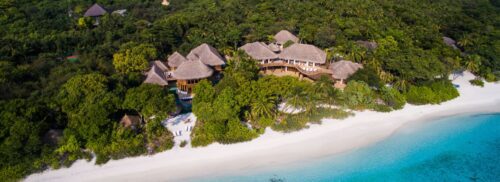
Soneva Kiri viewed on approach from Cessna Caravan

Soneva Kiri viewed on approach from Cessna Caravan

Soneva Kiri is an all pool villa, ultra luxury retreat on one of Thailand’s lesser developed islands in the Gulf of Thailand, Ko Kood. There are only 24 suites plus 3 special concept suites, ranging from approximately $1,000US per night up to a multi-room, utopian family beach retreat for 10x that per night. The eco-wonder structures of the rooms themselves are simply gorgeous. Massive tropical hideaways with world-class service and intelligent luxury.

Part of the science in custom designing Smiling Albino adventures is knowing which resort or room is right for which client. Soneva Kiri isn’t right for everyone. Some may find it too fantastical, too luxurious (possibility exists), or too removed from the outside world. But for those keen on an innovative and memorable luxury beach hideaway, Soneva Kiri is in a world of its own.

The Approach – Part of the Soneva Kiri experience is the private flight on their custom Cessna Caravan from Bangkok. The 1hr flight is a low hop over the Gulf of Thailand, with spectacular aerial views of the island groups between Ko Chang and Ko Kood. There are usually 3 flights each way per day, and the schedules are arranged to provide as minimum a wait as possible for guests arriving. Landing on the private airstrip on an island across the bay from the resort is a fun welcome, followed by a drink and greeting from your personal butler. From here you take a short boat trip to the wooden dock at the resort’s entrance and are escorted to your suite.

Soneva Kiri's private landing strip across the bay

Soneva Kiri's private landing strip across the bay

A few nice touches to note: 1 – from check-in at the Bangkok airport you don’t see your bags until you arrive in your room – nor do you feel the need to pay attention. And, like all Six Senses Hideway or Soneva resorts, there is a magical arrival-to-room seamlessness. No questions, no queues, no breaks in rhythm. From the private check-in desk at Bangkok’s Suvarnabhumi airport, you are smoothly transported into a wonder world of exotic Thai luxury.

At the resort dock you are met by your own personal butler, or “Friday” as they are known, ala Robinson Crusoe. Your Friday takes care of everything from arrival/departure details to packing a breakfast to go for you when you decide on a last-minute snorkeling outing in the morning. Your Friday is at your service and appear to stop at nothing to make sure you gain maximum jollity from this unique resort experience.

The Rooms – From a distance the rooms appear as wood-over-water fantasy structures covered with canvas re-creations of the 1972 Munich Olympic complex. Simply spectacular is just one of hundreds of possible descriptions.

Beach Villa Suite

Beach Villa Suite

I stayed in a Beach Villa Suite. With a total size of 403 sqm, you have a feeling of total privacy by way of a wooden footbridge and exterior gate, followed by an enormous outdoor terrace/lounging area, which leads to your private pool villa, and lush garden surroundings with a private footpath down to the beach. The rooms feel like a luxurious private beach house, not a suite in a resort. Your Friday is always a phone call via your complimentary cell phone.

The bedroom is surrounded by floor to ceiling windows, appointed with lovely tropical hardwoods and fine leather furnishings. Cabinets, the TV console and closets are custom-made in the form of vintage steamship trunks, leather-bound with brass buckles and fittings. If you’d rather escape the reality of TV (yes, I did just write that), then simply fold the flat-screen down into its trunk, and it makes a nice end table at the foot of your bed. Every detail in the room was designed within the exoti-sphere concept of the resort.

Great views for breakfast in bed

Great views for breakfast in bed

The dressing room is large indoor/outdoor canopy-topped pavilion (perhaps Olympic Village inspired), attached to the bedroom. Oversize steamship trunks turned on their ends provide double vanity stations with brass and porcelain sinks, wood and leather drawers, stand-up mirrors, hanging racks, etc. There are towels and bottled water stands at various locations in the suite, including tropical lounging beds to rest if the journey between the two of them is too far. The room is enhanced with a Bose sound system with hidden garden speakers, an iPod port, personal wine cellar, free-form pool surrounding your bedroom, multi-level wooden decks, stylish rattan furniture, a designer coffee-machine, and no less than three unique locations to have a shower, ranging from tropical rain shower in your garden to a glass-brick enclosed shower cove, to a poolside shower. These are the kinds of rooms you never need to leave. Large parties could be arranged on your spacious deck, or private dinners or family BBQs. There are chess sets, reading nooks, and inviting lounge chairs nicely placed throughout your super suite. Even a family sharing a suite like this can escape one another and spread out. A family of 3 or 4 could convert the Beach Villa Suite with Library into a two-bedroom Family suite. There is of course the Private Beach Reserve, which is a multiple bedroom tropical resort unto itself.

Out and About at Soneva Kiri – Soneva Kiri is a “buggy resort”, meaning buggies are used to get from dining area to suites, to the tennis courts, spa and gym, etc. I’ve commented before that I’m not a fan of buggy resorts, but unlike most resorts where you need to ring your butler or front desk to call a buggy, at Soneva Kiri you are given the keys to your own golf cart for the duration of your stay.

go easy in the wine bar

go easy in the wine bar

This makes getting around a snap, and there’s even a traffic official making sure incoming carts from the Cliff Villas don’t crash into carts leaving the spa/fitness center or wine bar. Your suite has its own parking lot and the convenience of the personal golf cart is a major plus, not to mention adding to the sensation of total personalization and convenience.

Dining – Like Six Senses Yao Noi and other ultra luxury destinations, the dining experiences at Soneva Kiri are world-class. Starting with the pool bar and futuristic tropical wooden breakfast pavilions, or glass-stool cocktail bar, dishes are top notch, the selection both creative and practical, and service outstanding. Many staff members have worked for other Six Senses properties and there is a genuine Thai warmth in the air.

Recently for some Smiling Albino guests we arrange a private sunset cruise with cocktails and canapés, followed by a fully-serviced gourmet beach BBQ on a lovely nearby island for dinner. Other musts include Khun Benz Restaurant. It is interesting to note that the Six Senses group had been wooing Khun Benz, the chef, for many years to join their properties in the Maldives or Middle East. Finally with the opening of the Soneva Kiri property on Ko Kood she agreed to launch the restaurant in her name a little closer to home. Another fun new addition in 2010 is dining in a tree house “pod” under the high canopy of palm trees.

Dine like a gibbon in style

Dine like a gibbon in style

There are also numerous creative spaces to dine, such as a private BBQ at Cinema Paradiso, the outdoor amphitheatre designed from the resort’s fresh water reservoir, or a customized BBQ of your choice in your villa, or a fantastic beach picnic (Crepes Suzette and omelette’s) for a day out snorkeling.

For my first of many great meals, I had a club sandwich – as is my custom – and it came with enough extras and sides to feed a friend. Gourmet cheese, arugula and other aromatic greens, homemade mustard, etc. As a club sandwich connoisseur I was more than impressed, and sufficiently stuffed. From a sommelier’s choice wine list to steamed sea bass and homemade ice cream, a chocolate station and cooled cheese pavilion, the dining opportunities very much live up to their ambitious price tag.

Spa-Gym-Beach – A pavilion up above the fitness center is an inspiring place for a yoga or Pilates session. smilingalbino-accommodations-sonevakiri-spa_reception_mThe gym, while small, is very well-equipped and well-staffed by people that clearly spend time in fitness rooms outside of just work hours. Soneva Kiri is a spa-lover’s paradise. The tranquil setting, stone footpaths, elevated wooden bridges and expert treatments are world-class. Six Senses is a spa and wellness focused company, and the spa at Soneva Kiri incorporates a variety of Indian, Thai, Western and holistic treatments in their signature SLOW-LIFE Spa Journeys.

smilingalbino-accommodations-sonevakiri-beach2_m There are a couple of beach options for guests at Soneva Kiri. The main suites overlook the Bay, which during high tide is a great swimming hole. The beach is cresent-shaped with fine, manicured sand. The rugged cliffs around the edges of Ko Kood have sprinkled the beachfront with scattered rocks, but this is very much still a fantastic beach lover’s cove. The south beach is operational as of spring 2010. This is a groomed beach oasis ideal for sunsets, BBQs, and family beach fun.

The Den beckons

The Den beckons

What to do – Of course there are lots of things to do at Soneva Kiri – ranging from a very nice snorkeling trip with picnic by private boat, etc. to jungle trekking, visits to waterfalls, eco-discoveries with the resort’s own pharmacologist (yes). There are the standard resort experiences – if the term applies to Soneva Kiri – such as wine tasting courses, cooking, Thai language and history, etc. The beach of course is a draw – and I went for a couple of great swims. The November-May time frame makes the beach/swimming experience more enjoyable, and while it is certainly doable in the wet season (June-October), it wouldn’t be as idyllic.

For some upcoming guests Smiling Albino has arranged a deluxe helicopter adventure from Soneva Kiri to nearby Angkor Wat, Cambodia. This trip involves a private meal in a remote Angkor temple, an overnight at Amansara in Siem Reap, and a day-and-a-half expertly hosted discovery of Angkor’s epic monuments.

For kids, as if the rooms weren’t enough fun, The Den is a giant bamboo and rattan wonder-cove full of educational discovery. There are astronomy classes at the resort’s observatory, or PADI dive instruction, or private movie nights, or trips to honey and pearl farms. Once you’ve done all that you might just have time to open your book and remember the real reason you came to the resort: to take a vacation.

a swing in an eco villa

a swing in an eco villa

Everything appears to work in sync – engineered in part by the resort’s own time zone, set an hour ahead of the outside world. Potential inconveniences could be the flight itself if the proposed times don’t match your international or regional arrival. The resort makes efforts to match their daily flight schedule according to the needs of the guests, but of course it is possible that you may have a wait of a couple of hours. Having checked through various Trip Advisor reviews it seems that most people are genuinely impressed with their experience. For some guests we have recommended other locations, even knowing that budget wasn’t necessarily the issue. Soneva Kiri is a special kind of escape and we’ve had several Smiling Albino guests overjoyed and grateful for our recommendations.

Take-Away – Soneva Kiri is an inspiring, concept-driven destination resort that ranks with the finest luxury properties in the Maldives or Caribbean. The creativity and sense of humour behind a resort like this – fantasyland really – makes staying an absolute pleasure.

Ideal for couples, families, groups of friends, those with golf cart driving experience.

Perfect for anyone who wants the best of the best – mixed with fun and tropical bliss.

Staying at Six Senses Hideaway Yao Noi

TAGS: None

As experience design specialists, we make a point of being as close to the final product as possible, and that includes having an intimate knowledge of accommodation options we propose to our valued guests. Anyone can book a resort, but knowing which resort is right for which guest in relation to their larger SA experience involves some science.

Last week I stayed a couple of nights at Six Senses Hideaway Yao Noi, one of the flagship properties of the luxury-wellness resort group, Six Senses. Having stayed at Six Senses Evason Resort in Phuket, and also recently at Soneva Kiri on Ko Kood, I had equally big expectations for Yao Noi. In short, the resort is absolutely stunning.

view from the suites

view from the suites

The Approach – I’m a fussy traveler and hate multiple transitions to get to the beach, but the Six Senses people make the transition relatively painless. I landed in Phuket at 0900am, and was met by the resort staff, then transferred 25 minutes in a BMW 5-Series to the Ao Po pier (ride was enjoyable but some ambient music would have been a nice addition to get you into island mood, or perhaps a piece of lemongrass to gnaw on for fun.) At Ao Po pier the resort staff pack your bags on to the large, comfortable speedboat, and then a nice 45-min ride brings you to the resort.

The view of the resort from the water doesn’t do justice to the tropical luxury therein. Mostly covered by dense foliage, the views of wooden rooftops scattered over an expansive hill are all you can see beyond the long, wooden pier. Turning your head 180 degrees however enables the stunning view of Krabi and the hundreds of karsts dotting the distant sea.

Arrival at Six Senses resorts is always smooth – it is one of the highlights. Your ‘Butler’ and the rest of the resort team greet you right from the boat, attend to your bags, feed you a drink, and whisk you away on a golf cart to your hideaway. For the duration of your stay your personal butler attends to your needs, arranges dinner reservations and activity excursions, and personally takes care of your check-in/check-out. This simple in-room check-in process could easily be done at virtually any resort, but oddly it isn’t. There is value in it and the Six Senses folks have it down to a science.

For those with no time for the BMW and boat trip to the resort, a helicopter transfer can be arranged approximately $1,000US per way from Phuket. This would be a lovely way to arrive with the hundreds of islands and karsts dotting the approach.

Pool Villa Suite

Pool Villa Suite

Rooms – I’ve been spoiled here in SE Asia with the opportunity to stay at some of the finest resorts in the world, and the rooms at Six Senses Yao Noi rank up with the best of them at their price range. My room was #51, a Pool View Suite, on the nearest side to the pier and water sports area (perhaps they knew…).

The master bedroom is a spacious, full-windowed suite with tropical hardwoods and state-of-the-art gadgetry and audiophile treats, a steam room, and so many nooks and crannies and places to hang things that I’m sure I donated half of my clothes unknowingly to the resort. Below the room is a spacious pool deck, your private pool, and the 2nd bedroom in the case of the suites. There is also a nice wooden deck bridge that leads to a garden area and sala for afternoon chess or quiet reading. No steal beams or concrete pillars or platforms – the entire room and surrounding area is hardwood and exotic, tropical furniture. The rooms are gorgeous, offer total privacy, multiple bathing/showering/lounging options, and eclipse the private tropical villa fantasy image.

Living Room in the Pool Villa

Living Room in the Pool Villa

Some other rooms to note:

Slightly closer to earth are the entry level rooms, Pool Villa and Deluxe Pool Villa, which are the same in virtually every respect as the Pool Villa Suite less the 2nd bedroom.

Ultra Luxury Suites

The Retreat is the resort’s 2nd highest room category. There is only one of them, and it features two separate master bedroom villas, an enormous private pool with panorama views and Olympic-sized deck, as well as a large common room for entertainment, meals, etc. This would be brilliant for a couple of small families, or a pair of couples. A few kids could be set up with extra beds in the common room (200sqm or so itself). Fabulous private hideaway surrounded by lush natural surroundings.

smilingalbino-accommodations-sixsenses-yao-noi-reserve-aerial

Aerial shot of The Reserve upon approach from the clouds

This room is fit with extra rooms for nannies and bodyguards, has a full conference room and wine cellar, gym, sauna/Jacuzzi and an enormous indoor/outdoor common area with multiple tables and lounging facilities, a water slide (great for kids, or adults after enjoying the wine cellar). The grand, tropical luxury of this super suite just might be worth the price. The view alone from opening the front doors has to be one of the most magnificent panoramas in all of Thailand.

Out and About Six Senses Yao Noi - Getting around the resort is easy with multiple buggies whizzing back and forth. My room was one of the furthest from the dining area but I found the 5-minute walk quite nice through stone pathways and wooden bridges. Ordinarily I don’t like buggy resorts where guests are left in sequestered corners of massive resort complexes, but the size here at Six Senses Yao Noi is very manageable on foot, or, as is the custom, just call your butler for a buggy. A short walk out the back gate leads you to the tennis court and a small local village if you’d like to briefly re-connect to the rest of the planet.

There are only 56 units at Six Senses Yao Noi, so the distances to the spa, gym, restaurants, beaches, etc. are all very doable without the buggies.

Service - This isn’t a 5-star resort, it is an ultra luxury resort, so the expectations one would have for service could make evaluating it rather severe. The service was very good – although at breakfast I did wait longer than I like to for someone to offer coffee on the 2nd day, and the milk wasn’t warmed as I’d requested on the first day. A very minor detail, however ultra luxury resorts should get this right.

The spa and fitness center were well attended with spiffy, knowledgeable staff. The butlers are the real stars here, and as they are commissioned to attend to your every need, the result clearly is that the service is excellent. The beach staff vanish when not required, and magically reappear out of nowhere (from the forest I think) when needed.

Food/Beverage – This is a great place to eat! I started with my customary club sandwich (Dan’s gold standard starter for any hotel). It may have eclipsed the supernatural club sandwich I had at Soneva Kiri, though it was 30% more expensive, but perhaps wasn’t as heroic as my personal favourite at D2 Pattaya. Either way, it paved the way for several more great dishes, salads, burgers, Greek sides, Italian pastas, and spontaneous off-menu Thai dishes as well. Everything was outstanding in accordance with the cost of each dish.

Happy Hour at The Den

Happy Hour at The Den

Dining at The Den and the The Dining Room are both cool experiences. The Den is a large wooden, two-story house with ambient music, massive couches with pillows and coloured cushions. You could slurp cocktails here all night and never tire of the groovy, chill-out vibe. Again, very nice, well-trained staff.

East Beach

East Beach

The Beach – The resort is built on a hill that slopes onto two different beaches: front beach and back beach. The back beach beside the pier is the water sports area – again well attended by attentive staff. I went kayaking at sunset to some remote beaches around the bay. Very user-friendly. The front beach is gorgeous – a great stretch of manicured beach sloping into clear water – the postcard image of idyllic sandy bliss. Sunsets here on the east side are fantastic as the trees and umbrellas cast long shadows into the water – creating pockets of sunshine and shaded swimming holes. The beach is wide enough to stretch out and have a full game of Red Rover, but it is doubtful this occurs very often. There are a series of deck chairs on a white sand bluff, attended by staff that seem to float in and out from the sky.

The Crowd – During my stay in April the guest mix was nicely eclectic. Young couples, Scandinavian families, retired couples, plus a few middle-aged single travelers. It was a healthy-looking, smart crowd, part of the extended Six Senses fan club of which I’m becoming a member (smart notwithstanding in my case).

Take-Aways - From tennis to snorkelling to wine tasting courses, there’s no shortage of things to do here. Those who fear being locked-in to a resort and prefer the freedom of strolling out into the real world might be claustrophobic. However, most Six Senses guests tend to indulge in the resort itself and intentionally shut off the outside world, so it is doubtful that this would be a drawback for any potential guest. The ‘Hideaway’ series of resorts in the Six Senses repertoire certainly make hiding away a pleasure.

Minor annoyances are the need to make dinner plans in advance. This is due to the intimate seating arrangements at each of the funky restaurants. You can always choose in-villa dining, or splurge for private BBQ or private beach dining, so this may only be a drawback for indecisive types like myself.

sixsenses at yao-noi

Sunset from The Reserve

We have sent several Smiling Albino guests to Six Senses resorts around Thailand, including Yao Noi, and the reviews are always exceptional. Our guests have high expectations – which is why we feel comfortable putting those expectations into the care of the Six Senses team. Often we supplement their experience there by offering our own value-added features like customized paddling outings to remote caves and islands, eco-discoveries with recognized experts, etc.

All in this is a spectacular tropical luxury experience. The transfer in and minor commutes within the resort are quickly overshadowed by the luxurious chill-out vibe the villas and grounds create. Food, while expensive even for a high-end resort, is quite outstanding, and the overall services and amenities are fit for the price tag. Per one of the Six Senses mottos, it redefines experiences….

Ideal for couples, honeymooners, families, those able to make advance dinner plans.

Father-Daughter trips on the move

TAGS: None

There must be a movement going on somewhere. Over the past 3 months we’ve received several requests forsmilingalbino-changmub-kai-john-darryl-downhill trips in which a father is taking his daughter on an adventure as a gift, either for finishing grad school, turning 18, or getting into the right post-grad program. This has been an interesting dynamic to observe. Over the past few years we have done quite a few mother-son trips, and hundreds of family trips, but virtually no father-daughter trips. Then 2010 rolls in and suddenly we’re doing four at once. Fantastic!

There are so many ways to maneuver a trip like this so that everyone gets what they want. One father-daughter adventure duo last month warned us that significant retail and entertainment time needs to be worked in or we’ll lose the daughter, but not at the expense of missing historical landmarks, or cutting short the cultural intrigue, or we’ll annoy the dad.

How we made this work.

bangkok-tuktukfar-01-01-01Take our great Bangkok day trip, the Bangkok Multi-Transport Adventure for starters. In the morning we slid into a couple of the essential landmarks like the Grand Palace and Wat Pho. At the latter we arranged some private time chatting with a couple of senior monks. This relatively open dialogue was a highlight and both dad and daughter had a short list of great questions. From here we switched gears and went for lunch at the trendy teenage hangout of Center Point Siam Square. While our guide explained some interesting things about the modern youth movement in Thailand, they listened to Thai pop music, watched Bangkok’s version of Shinjuku punk kids strut their stuff, and had ice cream and coffee. The conversation focused on the parallel forces of maintaining traditional cultural identity while openly embracing the freedom and ideals of the west. Some shopping time was enjoyed, and after this we hopped onto a canal boat hidden between retail cloisters that the average visitor would miss. From here we ventured back to the old city, jumped into a 3-wheeled tuk-tuk for a frenzied scramble through Bangkok Chinatown, followed by a highlight for everyone: a private canal boat trip through Bangkok Noi and back to their hotel.smilingalbino-yowarat-oldjunction3_resize

Significant cultural landmarks: CHECK

Interesting modes of transport to keep the adventure on a high: CHECK

Retail therapy: CHECK

Insight into local culture and ideas: DOUBLE CHECK

Take away value: high-fives with dad and daughter at the end of the day

This father-daughter combo rode mountain bikes, trained elephants, sipped cocktails in a chic Bangkok lounge, shopped, hiked through hill tribe villages, visited a school and lead an impromptu game of Frisbee in a village, and soaked up layers of culture with our guides throughout the country.

The same formula of managing the moment works for all of our adventures and uniquely enables Smiling Albino guests to enjoy the best of everything in a style they can call their own.

Snooping around Saigon

TAGS: None

By Daniel Fraser

December 5, 2009

I was in Ho Chi Minh City (generally still referred to as Saigon by locals) recently exploring some new ways to see the city as part of our Vietnam Grand Slam adventure. When Smiling Albino designs city day trips we always look for unique features to showcase the history and people, but we also try to gain insider’s access to certain areas and forge relationships with locals so that our guests experience something deeper – and more fascinating – than simply a well-organized stroll through the main sites.

So, while in Saigon last weekend I was trying to uncover the truth behind a couple of urban legends. For many years I’ve read about the famous photograph taken on April 29, 1975, the day before Saigon fell to the communists, which became one of the most compelling images of the American War.

smilingalbino-originalhughvaes-saigon1975

the original image captured by photographer Hugh Van Es, April 29, 1975

The quick facts of the photo are this: it was taken by Hugh Van Es, a Dutch photographer working for the American press covering the war in 1975. The image shows people scrambling up a ladder from a distance in order to reach a US helicopter perched on top of a building. When the photo appeared in papers around the world the following day it was erroneously reported that the photo showed Americans evacuating the US Embassy, a fact which the photographer tried for many years to correct. Certainly this mistaken reporting pleased the Vietnamese government as it fit their agenda more than the truth, being that the photo is really of Vietnamese escaping from the roof of an apartment a few blocks from the US embassy where several US covert officers and Vietnamese staff were located. The old US embassy in Saigon (renamed Ho Chi Minh City shortly after reunification in 1975) was eventually torn down 15 years ago.

When some reporters, especially the photographer himself, were allowed back into Vietnam in 1990, many of them went searching for the location where the photo was taken, but by this time the roof of the Caravelle hotel had been transformed, and the direct line of sight was marred by foliage. I think the idea came into being that if authorities reported the building had been demolished and re-built, it would put an end to the intrigue, and close yet another unusual chapter of cover ups and historic revisionism that has constructed much of what we know about the war.

Anyway, curiosity led me to search it out last weekend in the hopes it might add an interesting element to our trips in Saigon.

my shot of the existing rooftop in 2009 from a fire escape of a building half a block west

my shot of the existing rooftop in 2009 from a fire escape of a building half a block west

The photographer’s notes indicate he took the photo from the top of a hotel several blocks south, and that the address of the apartment for the evacuation site was 22 Gia Long Street. After the new regime took control of Saigon most of the city streets had their names changed and Gia Long Street become a distant memory. I had read that the building was torn down years ago around the same time as the old embassy and this was confirmed by several locals as well as a few western expats who had followed the story. Whatever the rumours, it turns out that the former Gia Long Street was changed to Ly Tu Trong Street sometime in 1976, and that the Vietnamese government probably perpetuated the story that the original photo took place on the roof of the US embassy in order to dramatise the American demise in Vietnam.

After some snooping around at an art gallery on the corner of Ly Tu Trong Street, I was able to climb out onto the fire escape and up to the 5th floor where I found a perfect view from the west of the famous rooftop elevator shaft captured in the iconic photo. Further curiosity brought me to befriend the building superintendent, and after a couple of gifts and a lot of waiting around I gained access after closing hours to the rooftop itself for a few moments.

smilingalbino-vietnamblog-helipad-front-251109

a direct view with my face directly in front of the rooftop.

The image with my face in it (I just climbed climbed 6 flights of stairs) shows the original view from which the photo was taken, albeit directly in front compared to a half mile away. A US government agent in Saigon in 1975 wrote that in order to support a possible helicopter evacuation they hastily reinforced the elevator shaft with steel beams a few days before the evacuation. Why these trival details stick out in my mind I’m not sure, but the caretaker confirmed this little fact – and it is one of the reasons that the same elevator cabin is still in use 35 years later, instead of a new one, due to the limited space around the shaft supports to allow for a replacement.

Clearly I’m no detective, but this image and the story has intrigued me for years and it was a fun caper tracking down the details last weekend. Call it trip research – or a personal obsession – in any case SA guests have another neat story after their trips with us in Vietnam!

smilingalbino-vietnamblog-helipad-2-2511091

a north-view from the cafeteria of the HSBC bank a few blocks north. This view would be opposite of the original photo, which we can see now is blocked by the large construction project with green scaffolding behind.

Ultimately I guess it is these little discoveries that I hope make our adventures more interesting.

For some interesting background on the photo and the events leading to it, here’s a link to a story by the photographer: http://www.mishalov.com /Vietnam_finalescape.html

How to Take a Hike

TAGS: None

by Daniel Fraser

I have had my trip designer’s hat on several times again the past few months. It has been fantastic and has mostly involved testing bike rides or motorcycle routes or finding scenic detours, squeezing hotel pillows, sampling spring rolls, tasting hotel coffee or grilling the local bartender on how to get the keys to the city.

A nice footpath in northern Thailand

A nice footpath in northern Thailand

Many of our trips involve hikes and bicycle rides, some as short as an hour and others multiple days. Specifically I have been surveying various hike possibilities lately in far flung places like Isaan (NE Thailand), central Laos, Chiang Mai, Chiang Rai, and more recently in northern, central, and southern Vietnam. I have driven several trekking guides to the point of insanity and we’ve gone back to the drawing board multiple times. I admit that at times I have struggled to explain exactly what I am or am not looking for when it comes to a good hike or bike ride or any day excursion for that matter. So, I’ve come up with a simple quick-list of qualifications that, say a hike must have to get the Smiling Albino stamp of approval.

I’ve omitted the obvious things like ‘carry proper supplies’, or ‘be a friend to nature’, etc., as that surely has been covered already.

Following, in no particular order, are a few steering points that I’ve used when building hikes or bike rides (from 1-8hrs) for Smiling Albino:

1 – Graceful Transitions
This means ideally no driving 45-minutes just to get to the starting point of a hike, or an hour in a van back to the resort when it is finished. Obviously in some regions this isn’t possible, but in the case where any transfer is necessary the hike must be extra special to justify it. Good flow is vital to a perfect holiday, and graceless transitions can upset the otherwise good rhythm of your trip. Now, if the hike absolutely necessitates a commute at the start or finish, or both, then an effort should be made to involve alternative means to get there rather or back than a van ride, such as a bicycle, boat, or even motorcycle taxi. Maintaining good flow is as important to an adventure as the hotels and meals. We are currently planning a couple of hikes in central Vietnam in which we transfer to the start point by a local motorcycle touring club and finish the hike a stone’s throw from a hillside pub – that’s good flow.

2 – Modifiable
As we would like several different types of our guests to enjoy a great hike, it should be modifiable so that Olympian guests can get their burn if so desired, or the leisure stroller can feel like they got what they were after. Shortcuts, scenic routes, fun detours and strategic stops make this possible.

3 – Higher Purpose
Besides a walk in the woods, what is the purpose of the hike?
Smiling Albino does a couple of fantastic hikes in northern Thailand where there is a relevant sub-theme to the hike. We follow village trails once used by smugglers in the former opium trade and use the time discuss the eradication struggles, and witness the new agricultural alternatives the villagers are cultivating. Throughout the hike we’ll discuss the role opium played in the region and how everyone from the Chinese government to the CIA had their direct influence on the villages that feature in the hike.

Not that wandering in the woods and quoting Walt Whitman alone wouldn’t be fulfilling enough, but surely a hike’s purpose, other than getting back to nature and a bit of a workout, must be to connect the hiker with the location. Additionally, bonus points if the hike follows the path of a historic battle, or even traces the migration of a people to a new settlement and the reasons behind it.
A great trip needs multiple layers of connectivity to truly be impactful.

4 – No logging roads or constructions sites!
Although one can’t deny you are still out in nature and far from the city

A guide gives blankets to a local in northern Thailand

A guide gives blankets to a local in northern Thailand

streets, walking down logging roads or through forest construction sites or mega agro-projects just doesn’t fill the soul’s need for tree-hugging granola moments of bliss. I once did a hike that followed a series of logging roads until we reached a giant gravel quarry, where we had lunch and observed heavy machinery crunch rocks. Needless to say it didn’t make the cut for SA trips.

5 – No staged village visits
For too long in SE Asia hikers have been subjected to the trumped up ‘remote village visit’. Truth is most of the villages accessible on a day hike are not that remote, and as we know unfortunately some villages are incentivized to stage some of their tribal authenticity. I have no problem with being part of equitable fair exchanges between groups (fruit or blankets or basic medical materials in exchange for a visit to a house for a whiskey with the local shaman or a cigar with the village chief, etc.), but to make the villagers themselves the focus of the hike ultimately creates an awkward mercenary exchange in which the visitor is unknowingly paying for village behaviour to appear a certain way to fulfill his/her expectations. Professor Erik Cohen has a great series of white papers on this topic in his White Lotus books publication.
So, only subtle village visits please, and no cultural dance shows unless they were happening that day regardless of our passing through, and no human-zoo gawking and romanticising the moment. Pass through, learn a bit about them, provide a fair exchange if appropriate, and continue with getting back to nature.

6 – Bush, Plant, Bug, Bird
At least some basic learning about flora and fauna and the types of crops growing in the area is needed. Now, most guests that join our short hikes on our Thailand trips or our longer hikes on our Nepal/Tibet trips are not looking for a comprehensive breakdown of species and biodiversity in the region, but they would at least like to learn about a few crops, bushes, plants and other things along the way.
“Hey is that morning glory”? “Yes, and we’ll have some tonight.” “Cool”. Or, “Hey, can you smoke that?” “No, it is pumpkin.”

7 – Snack
Depending on the length of the hike, appropriate food at an appropriate place can’t be underestimated. I was once on a hike (before Smiling Albino existed) and we had a picnic lunch of rice in a box served under a bridge. Zero points for ambiance – but surely even some basic fruit and nuts under the canopy of the jungle would have tied us over until dinner?

8 – Transcendence (in a hiker’s context)
Ideally the hike actually brings you from one place to another, or, in a perfect world, the hike is part of a larger experience carefully woven into the day. For example, sometimes we do a short afternoon kayaking venture down a river in northern Thailand. If the guests are up for it, then we offer the alternative to hike back to the resort rather than a longtail boat (5km or less) just for a change of scenery. In this case the hike is woven into the ongoing events of the day and becomes part of the kayak trip, which becomes part of getting back to the resort. The activities combine to form an afternoon’s experience which goes beyond the simple joy of each element itself. This adds to the vital ingredient in any adventure: flow. Re-arranging the dots, as opposed to simply connecting them, enables our guests to hike right back up to their rooms after a trek in the woods and a paddle down the river. No vans or graceless transfers. That’s some good flow.

9 – Be a friend to local communities
This is vague of course, but it means that there should be some higher learning that the guests gain about the area and the people. A visit to a local school can be a great way for a few moments of innocent cultural exchange, or throwing Frisbee for a few minutes with children from a rural village. No handing out candies or clamouring for photos, just some dignified human-to-human interaction.

10 – Work-out
Lastly, if a hike isn’t strenuous enough to warrant a cold beer immediately upon completion, go back to the woods and start again. You’ve at least got to work up a sweat, or use some muscles that have been dormant for a while, or push yourself even slightly so that that beer at the end feels like you earned it.

Walking with locals in the mountains along the Nepal-Tibet border

Walking with locals in the mountains along the Nepal-Tibet border

11- Bonus
A great company will prepare cold beer or your favourite beverage of choice at the end of a hike (unless of course operating a vehicle is still required afterwards).

This isn’t a lecture and no travel company is perfect, but having had my trip design hat on several times the past few months I was not able to find what I was looking for just by using terms like ‘flow”, “transcendence”, “graceful transitions” or “connectivity”. So, I jotted down the basic thoughts which have governed my approach to hikes and I realized the way we approach things at SA involves a great deal more analysis than most people realize. Plus we’re very high maintenance. The small details are enormous.

D2 Baraquda Pattaya

TAGS: None

By Daniel Fraser

On a recent trip to Pattaya I was intrigued enough to to and stay at the very new D2Baraquda.

D2 is the new hi-touch, design hotel fleet of the celebrated Dusit group from Thailand. Branded as chic and refreshingly hip, D2 Pattaya is a nice change of pace in Pattaya. The city itself is going through a bit of a subtle face-lift, with some sleek new bars, restaurants and hotels competing with the voluminous buffet of mediocrity which has made the town famous since the last days of the Vietnam War.

D2 Baraquda Pattaya is a nice slice of this new wave of goodness splashing into Pattaya. Located on the 2nd road from the beach right in the heart of town, D2 is withing walking distance to walking street and all of the other bright, shiny objects that compete for our attention in town.

As soon as you walk in to the high-ceiling, airy lobby, you feel as if you’ve been delivered from the commercial grime of coastal Thailand into a energized wellness chamber. D2′s GM Mr Paolo, or ‘Guru’ as his business card reads, has a swift an efficient operation run by enthusiastic and pleasant staff.  Small touches like a welcome cappuccino or latte in the cool and airy corner of the lobby made for a pleasant welcome. Rooms are hip and spacious and overall they do a great job of making limited spaces seem very large with giant windows and gargantuan mirrors, curved lines, glass panels and wave-inspired fashionable furnishings. The Deluxe Rooms feature a glassed in bathroom area with rain showers and intelligent places to hang things like towels and shower kits. These bathrooms are designed by people who understand good bathrooms.

Very large mirrors feature Deluxe Rooms beside them

Very large mirrors feature Deluxe Rooms beside them

Settling in, I ordered a club sandwich – my initial gold standard of how even the most basic food from the kitchen is. It was outstanding. A gourmet Club2 sandwich made by people who clearly understand what a good sandwich is (maybe sourced by the same company who sourced the shower people above).

Seeing who is staying at the hotel is also a barometer of what kind of place it is. It was nice to see a broad cross-section from young Thai families, healthy western couples, fashionable gay travelers and respectable-looking city folk. This was a nice jolt of comfort in Thailand’s coastal city of neon and beer bars.

it was so groovy i expected dolphins to join my swim....

it was so groovy i expected dolphins to join my swim....

The other facilities, like swimming pool, restaurant, fitness center and spa all work together nicely. They are functional and practical, and though neither of them win a category award on their own, there is an undeniable freshness and good value vibe in every corner of the hotel. I had a work-out, massage treatment, a good meal, and a nice swim with a little sundeck time and a book while feeling a million miles from Bangkok, and the cluster of Pattaya itself, for that matter.

The Deep Bar, located upstairs on the 3rd floor, is definitely among the hippest lounges in town. It felt a little like a coastal Bed Supperclub with an aquarium-like cool twist. Good drinks, hi-tech touches and trendy staff make it an excellent meeting place before or after a night on the town. Further up, the cool open-air lounge on top has great views of the rest of the town while giving you the luxury of being away from it, with zen-like music and breezy cocktails keeping you occupied. I arrived late, but assume it to be a fantastic sunset lounge.

chilling out in style in D2's Deep Bar

chilling out in style in D2's Deep Bar

After a late check-in and a nice night in D2, I woke up feeling rather effervescent. In my 10 years in Thailand I can’t recall feeling quite like that in Pattaya before.  On an upcoming motorcycle trip across Thailand we will be using D2Baraquda for a final night before our group departs. Great choice.

Conclusion: How refreshing! While it is possible to lose your soul in Pattaya, refreshingly hip places like D2 give it a nice space to breathe.

Amphawa: Chatuchak on a canal – with a little style

TAGS: None

Chatuchak on a canal – with a little more style

Vintage Amphawa, circa 2009

Vintage Amphawa, circa 2009

Last Sunday, Nan (our UK-Thai intern-connoisseur-culture-guru-food-master) and I took a quick trip down to Amphawa in Samut Songkram province. The town of Amphawa has become a local darling amongst Thais as a nostalgic step back in time to the dreamy canal life of early 20th central Thailand. Apparently 60 years ago the town was a thriving site for canal-side, a predecessor to our modern – and slightly more commercialized – floating markets. Part of the appeal is that it reports to be uncorrupted by commercialism like so many other aesthetically-challenged market attractions in Thailand. So, after much heralded fanfare we finally went down the check out the fuss.

The town of Amphawa itself is non-descript, except for those nice canal-side lanes and of course the buzzing commercial center along the narrow stretch of the Mae Khlong River. This is the Amphawa that everyone is talking about. On a busy weekend this single stretch of canal, straddled on both sides with shops galore, food galore, and floating seafood hawkers galore, could almost be described as Chatuchak on water, but with a little more style. A quick walk through the main retail strip revealed no one selling English Premier League jerseys. We really liked it!

The old market strip

The old market strip

There are a few spots around town that suffer some chaotic weekend traffic, but not like Bangkok. Visitors are mostly Bangkokians escaping the congestion and street-side retail madness of the city for the canal-side retail madness of Amphawa. The market district featured the greatest selection and variety of Thai food I have probably ever seen in one place, including hundreds of different types of Thai sweets and desserts – many of which I tried and enjoyed – sold from crammed riverside stalls and wooden kiosks. Traditional coffee and Thai iced tea, old wooden buildings and shop fronts, lots of vintage furniture and nostalgia shops, etc., and one outrageously narrow little shop selling paper and cloth animal-figure mobiles. It is just wide enough for one person to walk down. The store is jam-packed with two customers and nearly intolerable if an employee is also present. Thankfully the shop’s single employee stayed out in the front of the store, encouraging people to heed the sign above the door in Thai saying ‘please don’t stand in front of the door and take photos of our little shop’. Who could resist? I took two photos.

some great eats at Amphawa Ha Hae

some great eats at Amphawa Ha Hae

Amphawa has many claims to fame, including having the best sugarcane juice and coconut milk in Thailand. This point shouldn’t be overlooked, for in a country with such a highly cultivated sense of taste, coconut milk especially forms an integral part of many Thai dishes and its world famous curries. So, Amphawa’s coconut milk is the gold standard and the locals spare no effort to produce dozens, hundreds of different kinds of traditional Thai snacks and desserts with it.

We made real efforts to meet real locals, not just merchants from Bangkok who’ve capitalized on Amphawa’s growing popularity to set up shops, but the locals who’ve been there for generations, some of whom actually remember Amphawa as it was in the post-war era. The change took place with the construction of south Bangkok’s major highway program to Petchburi and Prachuap Khiri Khan. Bridges were built, canals closed, road traffic moved from the river-side communities to the new expressways, and Amphawa quickly became a forgotten town from a different era. Though it never lost its stature as a food capital, its floating markets were quickly overshadowed by larger commercial markets such as Damnern Saduak. As one local, Mr Ouan from the Kumpan Restaurant pointed out, the floating market style of trade you see at Amphawa more closely reflects the traditional Thai floating market, in which hawkers would line the banks of canals and sell to local businesses and residents, rather than the modern boat-to-boat versions we see today. Not that one is more authentic than another, but the re-invigorated modern Amphawa certainly retains some nice threads of the past. Mr Ouan then took us a few blocks from the main market street to his family’s wooden house along a wider stretch of the Mae Khlong River. He was a fountain – or river – of knowledge and seemed genuinely intent on making sure we knew how seriously local families are in preserving their native town. This was refreshing. We then met some other local business people manning local shops, photo stalls or ice cream booths, seemingly unfazed by the swarms of visitors around them, and carrying on cheerily on their own terms. It was like meeting members of an unofficial fraternity called Friends of Amphawa. They love where they live and seemed quite thrilled that we liked it too.

fish cakes

fish cakes

Another interesting thing was the lack of western visitors. You could count them on one hand. Again, the presence of western tourists does not by any means diminish the authenticity of the location you’re visiting, but more so the flock of Thais taking part in the weekend festivities can’t help but leave an impression on the visitor that this is a special place, a local place.

Various members of our Smiling Albino team have been back and forth to Amphawa, Mae Khlong and Khlong Kone at the Gulf of Thailand a lot recently in preparation for our cool nostalgia trip called ‘Bangkok 1910′. This vintage excursion is a nice way to enjoy a couple of days experiencing old Bangkok, Chinatown, and also Amphawa, the traditional floating markets, etc.

Now back in Bangkok, I am eager to get back down to Amphawa again. After all we missed the evening market hours and boat paddling excursions that have become popular. Besides, every Thai person I’ve talked to since then has scolded me for not bringing back some of Amphawa’s legendary desserts and snacks. It is as good a reason as any. Be back soon….

Staying at the Mandarin Oriental Bangkok

TAGS: None

Staying at the Mandarin Oriental Bangkok

by Daniel Fraser

I had a nice opportunity this week to spend a night enjoying my birthday at the Mandarin Oriental Bangkok. It is one of the world’s most celebrated hotels and we’ve sent guests there for many years as part of our tailor-made adventures in SE Asia.

mo-sala-rim-naamIt was hard not to be impressed even at check-in, where multiple staff members greeted me with “happy birthday Mr Fraser”. The greetings from the check-in staff, and affable sales director who came to meet me were classy and brief, and the car-to-room experience was done with graceful, clock-work precision.

As a company that coordinates precise check-in details for hundreds of guests at hotels around the region each year, I paid careful attention to the welcome procedures from the viewpoint of an overseas guest. It was quite flawless and soon I was effortlessly lured into my classy river wing cocoon.

The room itself was beautiful, of course, and was full of subtle surprises that you’d notice throughout the afternoon: a piece of birthday cake on fine China, a welcome gift with a handwritten card from the housekeeping staff, another welcome card handwritten at the writing desk from the sales director, a tray of fruit in one corner, then a platter of local delicacies waiting to be discovered on one of the tables near the window. Everything wrapped in ribbons, placed delicately on fine cloth and paper, presented with intention. It was personal and warm.

Next: the fitness room experience. To be sure to avoid a lobby faux paux, I called front desk to make sure I could go there dressed in fitness attire, and proceeded across the river on the Oriental boat to the spa and fitness center. The gym is world class, as you’d expect, and the staff knowledgeable and attentive, as you’d expect. I have heard that staff spend nearly 100 hours each year on supplementary service training, resulting in a well-oiled machine of courtesy and sophistication. Plus, I like being offered “non-chilled” water for a change.46-the-oriental-spa

The Oriental is a luxury resort nestled on the riverbanks in the city. There are a hundred things to do, such as grass-court tennis, squash, aerobics, yoga, or indulge in the Ayurvedic therapies at the award-winning spa, or my personal favourite, chatting with Khun Angkhana, the reading room coordinator who has now been at the hotel for over 62 years. Make time to sit and chat, there are 7 decades of great stories to be shared. In addition, the Author’s Lounge itself is a stately room that deserves at the very least a cup of tea and a short wander, or more if your schedule allows. It is a refreshing atrium that would be at home in many of the finest mansions in Europe. It is part of the Oriental’s history and nostalgia, and provides the entrance to the grand author’s suites.

Next: poolside for a club sandwich. It is nice to see a hotel pool that you could actually drown in these days. One designed before modern safety paranoia turned them into very long kiddie pools. I did some laps, plunged down deep, and had it almost all to myself except a napping couple in one of the salas around the poolside garden. The servers at poolside did all the things you’d expect at the luxury level, being present but discreet, helpful but not imposing. I had three non-chilled waters and a good club sandwich.

Another memorable – and almost unnoticeable – feature is the invisible team of elves that provide regular upkeep and services to your room while you’re out. It makes sense that Mandarin Oriental has a long guest list of luminaries from famous CEOs to heads of state. It is a hotel that thinks for an extra moment, and goes the extra yard. I recall once that they asked one of their security guards to walk a few blocks down a nearby street to confirm the name and spelling of a jewelery shop that a guest of ours had inquired about – after they’d checked out. Instead of just returning with the basic facts, he also produced the private numbers of the owners just in case we needed them. This is proactive treatment not always found at the service level.

Beyond glowing accolades stating the obvious, such as outstanding rooms, famous restaurants, antique furnishings, a staff-to-guest ratio of 3:1, etc, it always comes down to the little things, the quirky fine touches, that make the difference. The elevator attendant who knows your floor number on the same morning you’ve arrived, the bartender who greets you by name before you order a drink, and the long-time staff, some of whom have been there for more years than I’ve been alive. I am a low maintenance traveler but carry the high expectations of our valued guests, and I began to like the sensation that a well-trained circle was eagerly anticipating my every move.

There are dozens of luxury hotels in the region fulfilling a variety of styles, neo-classical, modern minimalist, boutique Thai, grand and international, chic, etc. And, depending on the customer it might be argued that there may be a finer hotel to be found somewhere, but the Mandarin Oriental Bangkok is surely a finer overall experience.